
An interactive artwork that celebrates Rohingya culture and invites you to stand in solidarity with the worlds largest stateless people

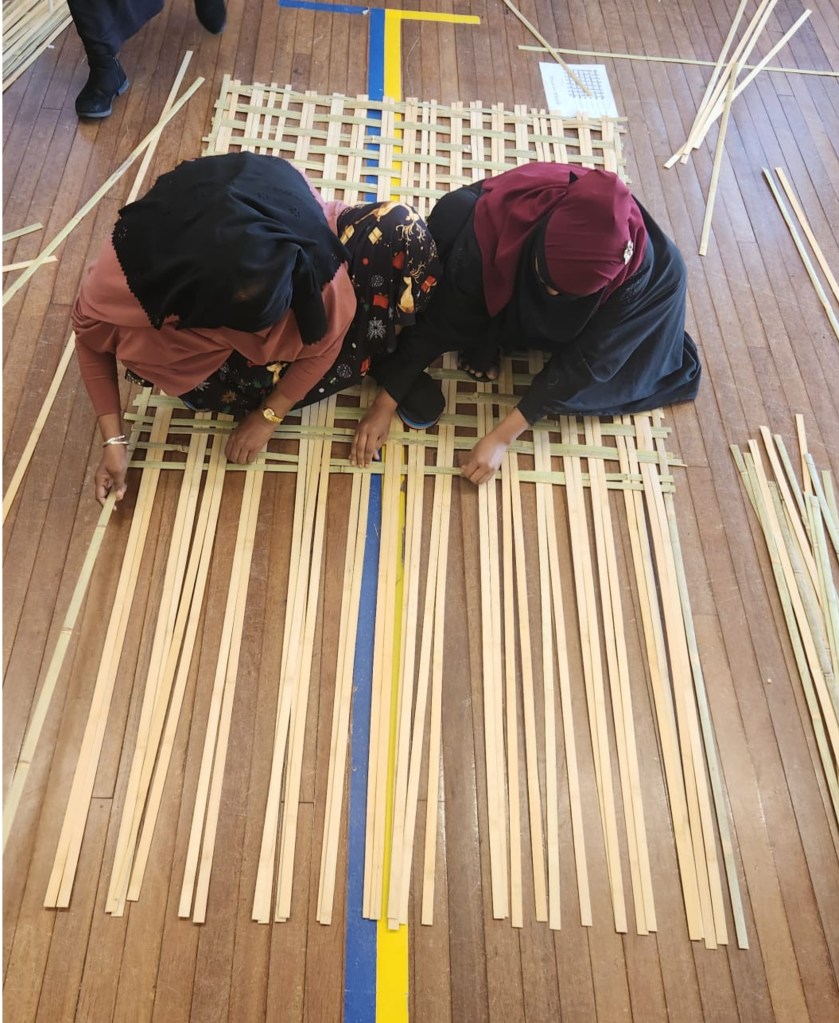
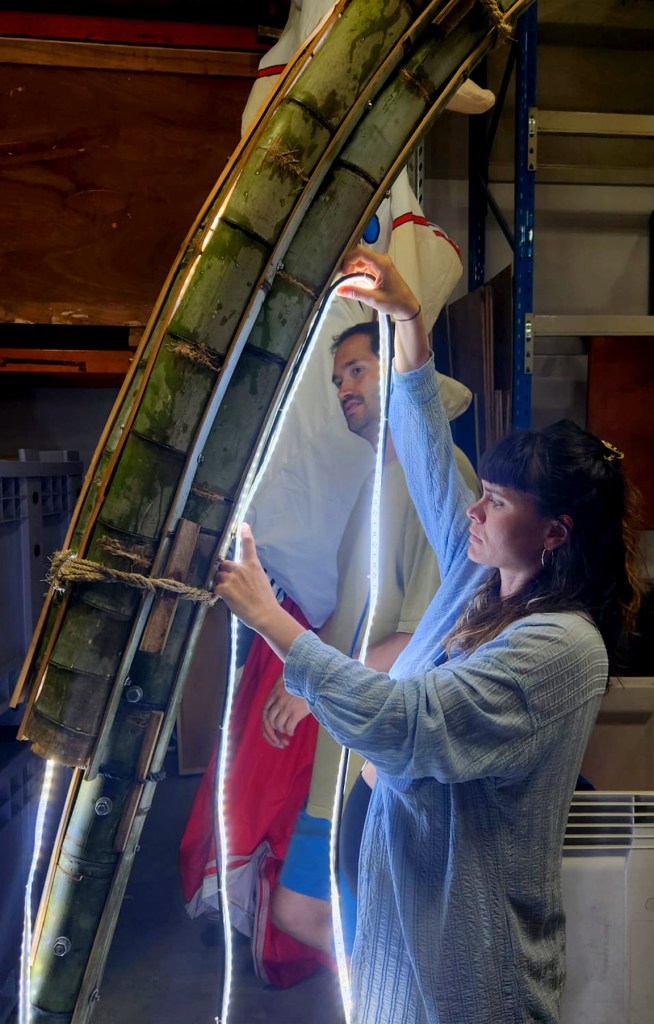
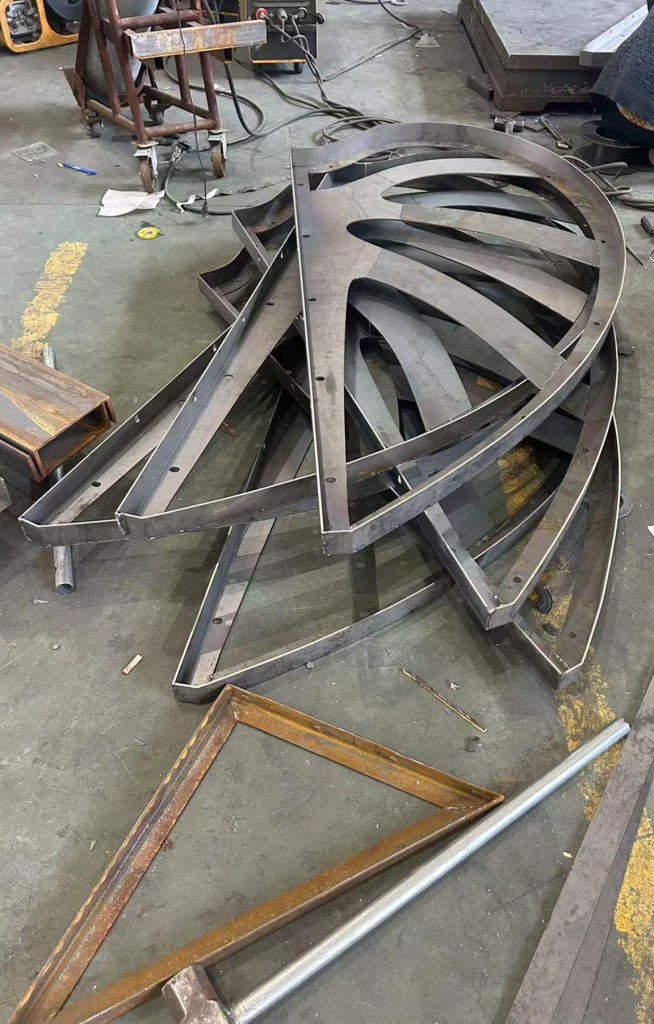
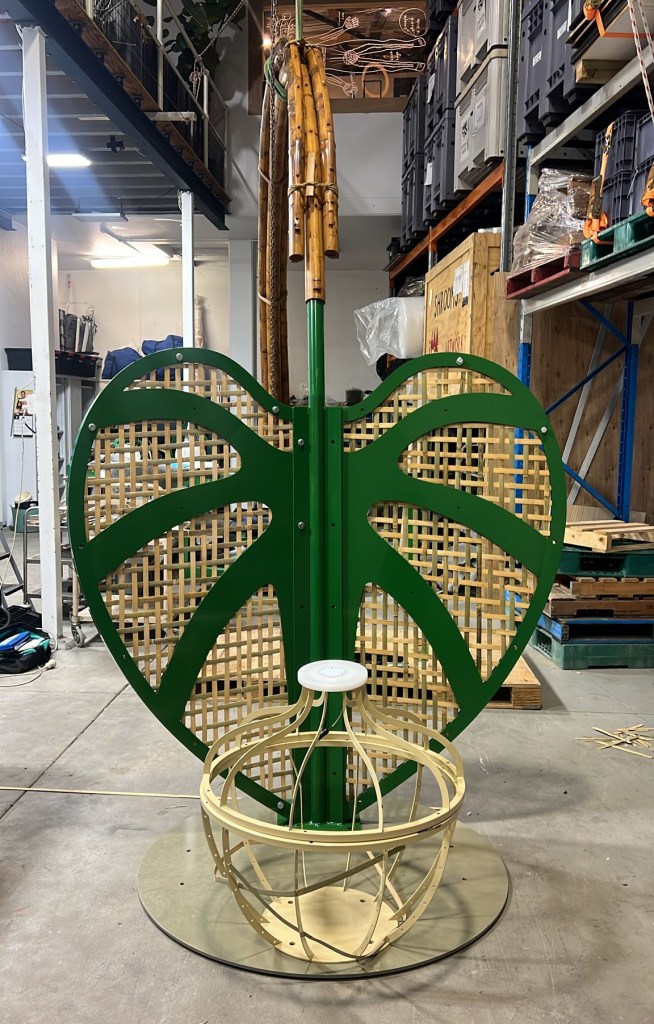
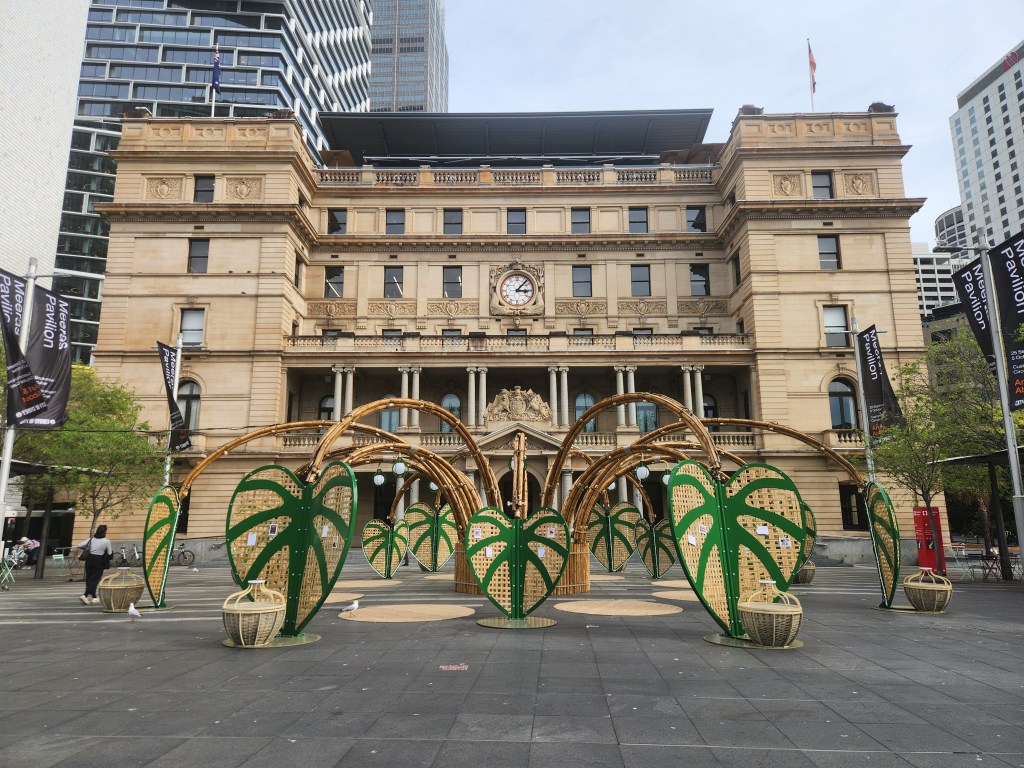
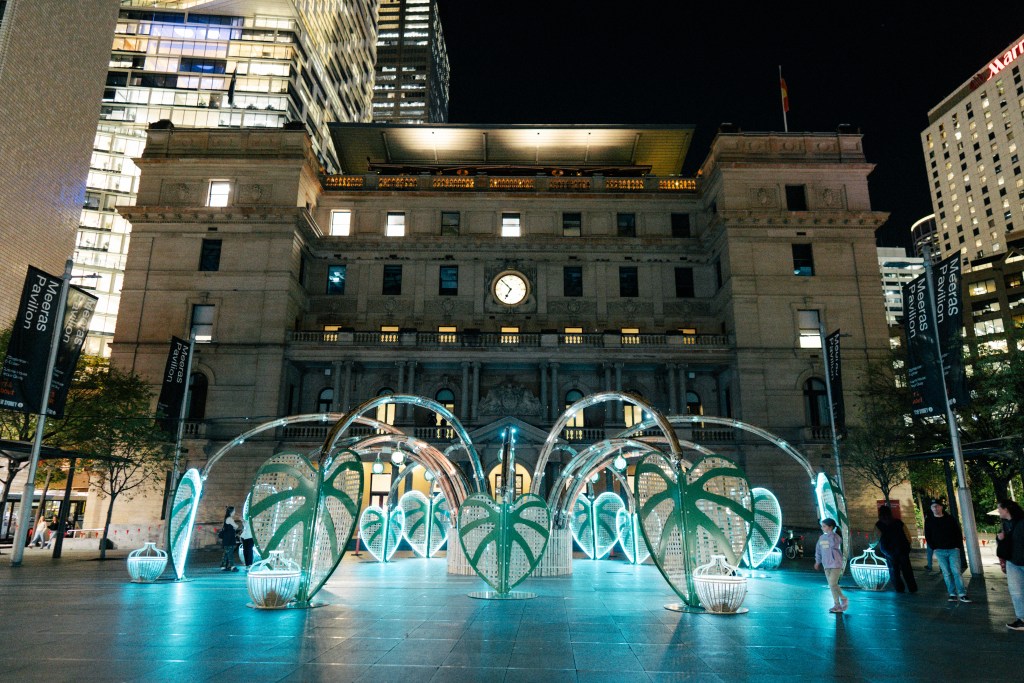
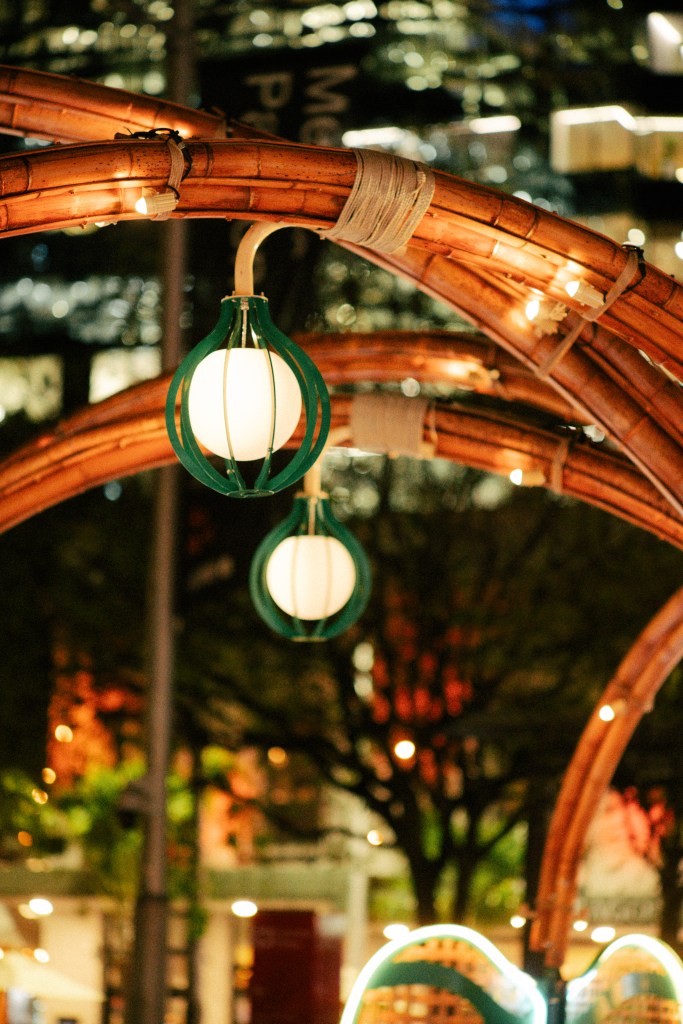
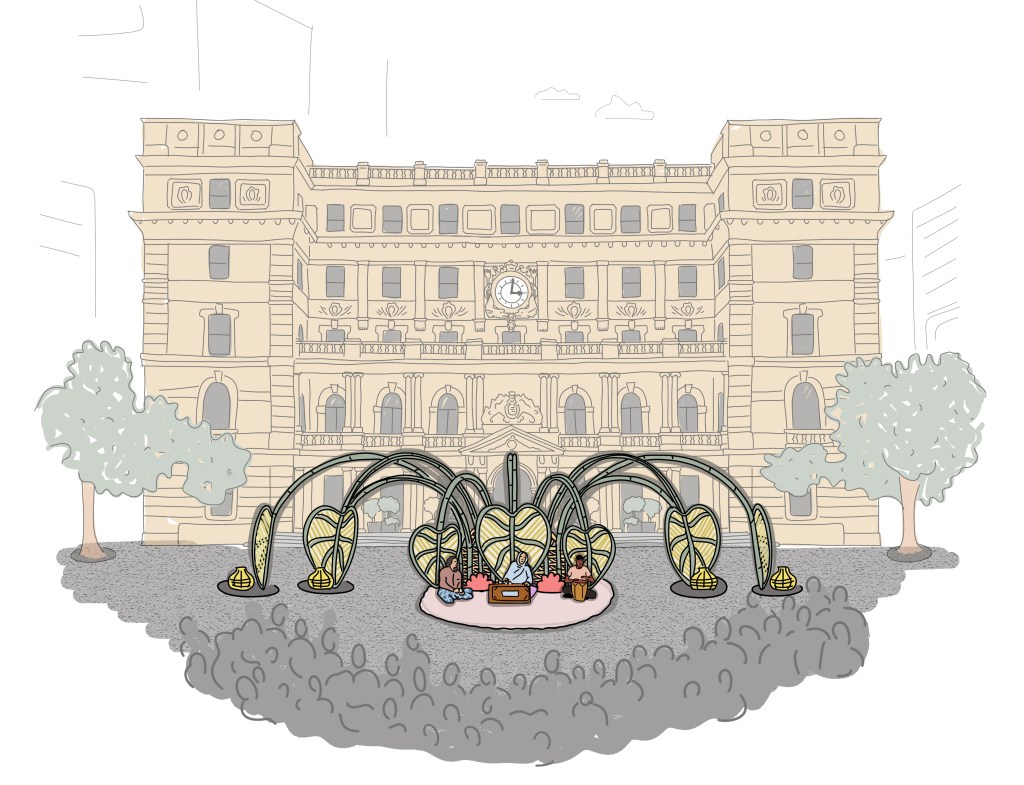
Meeras is an interactive artwork dedicated to Rohingya stories and their current experience of living in statelessness. Made from hand crafted bamboo, colourful steel, and woven ropework, Meeras is 16 towering Taro Leafs embedded with interactive lights and sounds.
Audiences are invited to step into the immersive space, control light animations, and listen to a soundscape of field recordings taken moments of making Meeras in Sydney and Bangladesh.
The Pavilion was created through a three-year collaboration between Australian and Rohingya artists within the Creative Advocacy Partnership, co-designed alongside Rohingya communities in Sydney, Kuala Lumpur and Kutupalong refugee camp. It stands as a defiant symbol of Rohingya culture, solidarity, and existence.
Meeras at Art & About Sydney
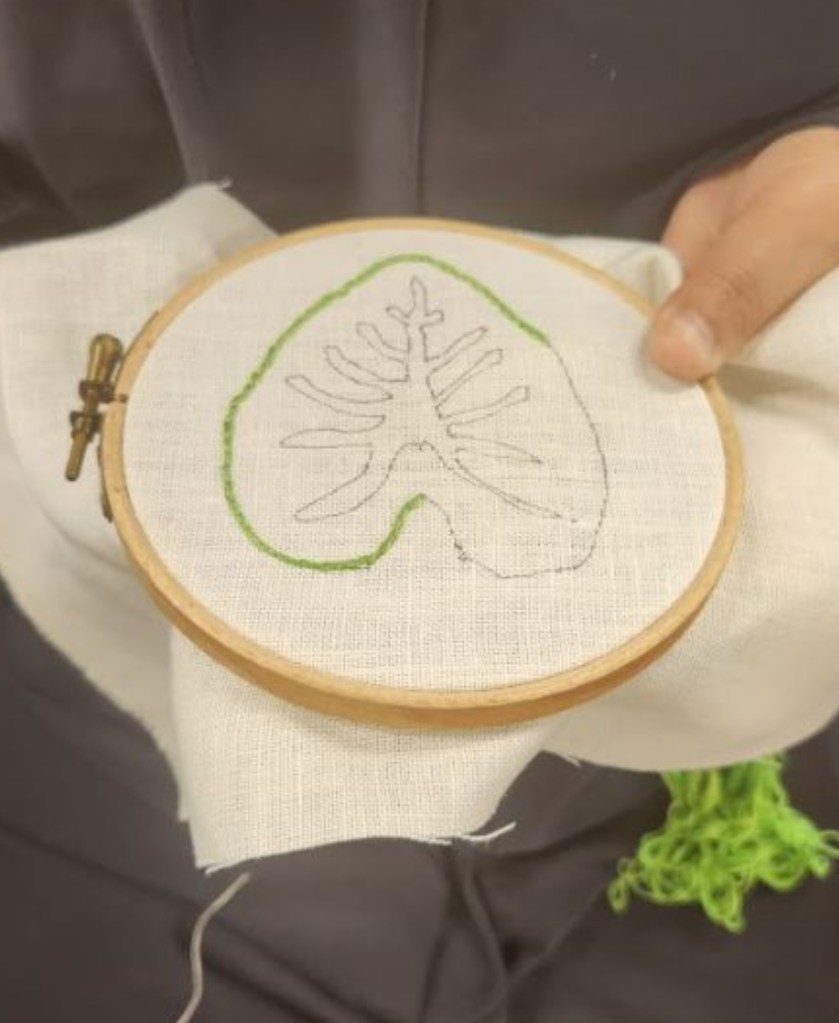
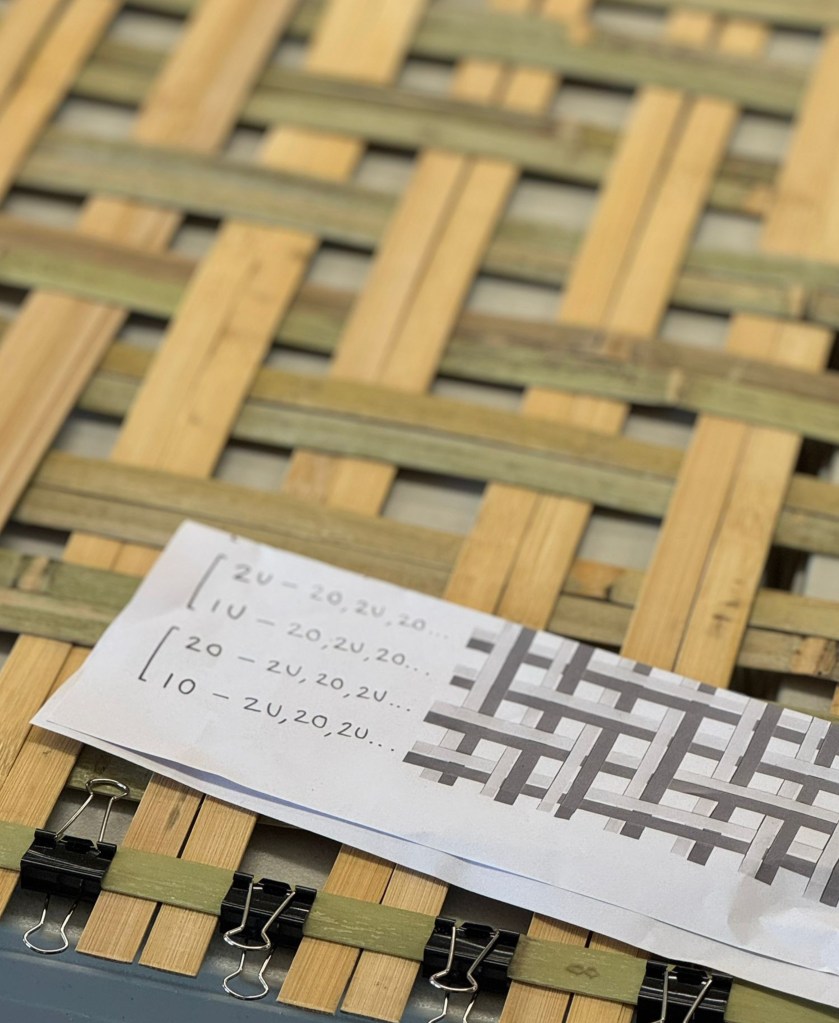
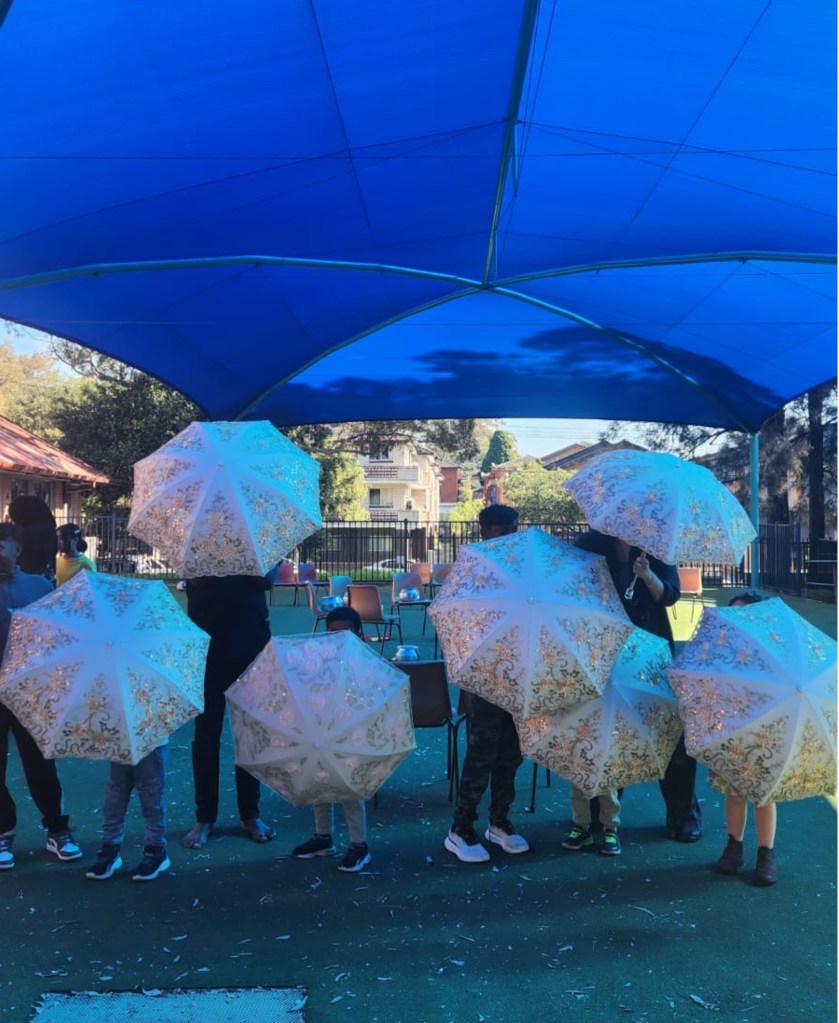
In October 2025 Meeras sat in Customs House Square in the heart of Sydney, Gadigal Country and was activated through two weeks of talks, films, embroider and bamboo workshops, advocacy training, and cultural performances including music, poetry and a fashion parade.
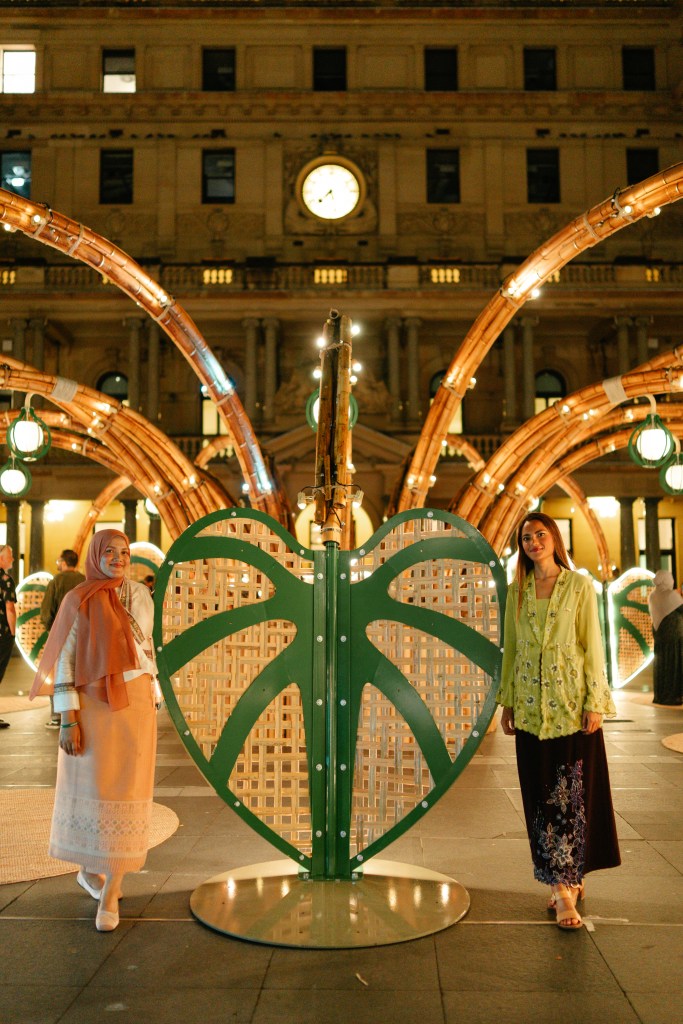
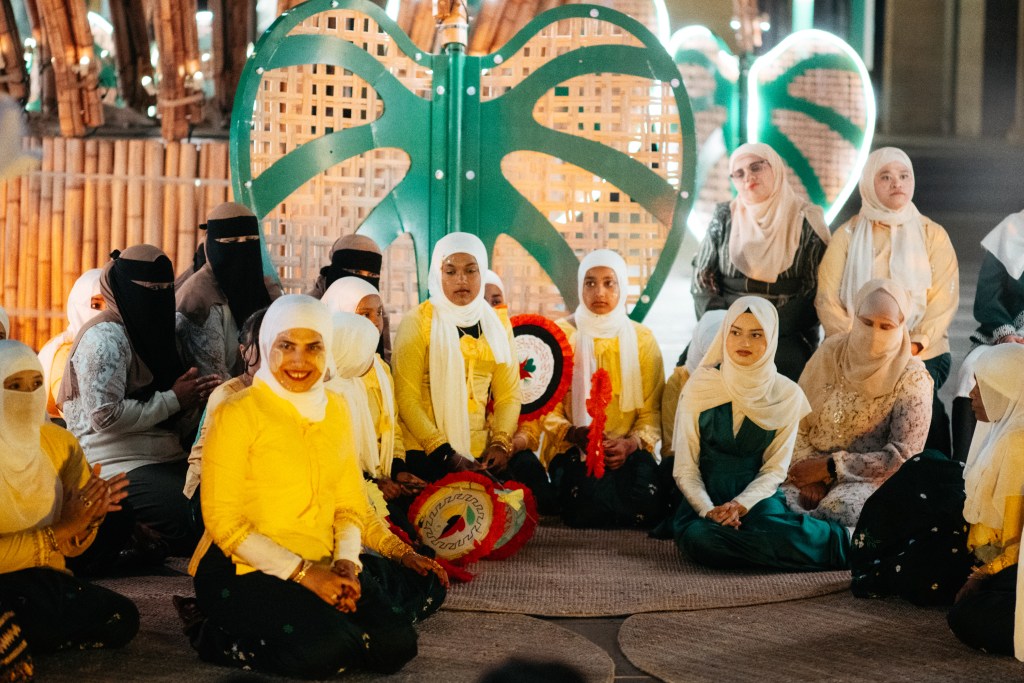
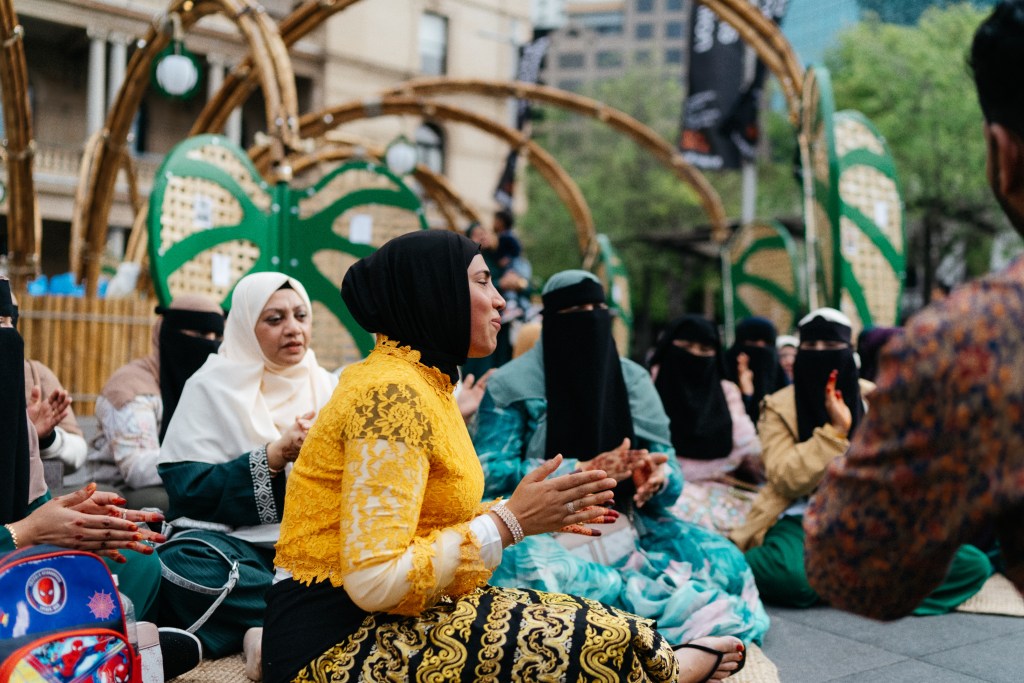
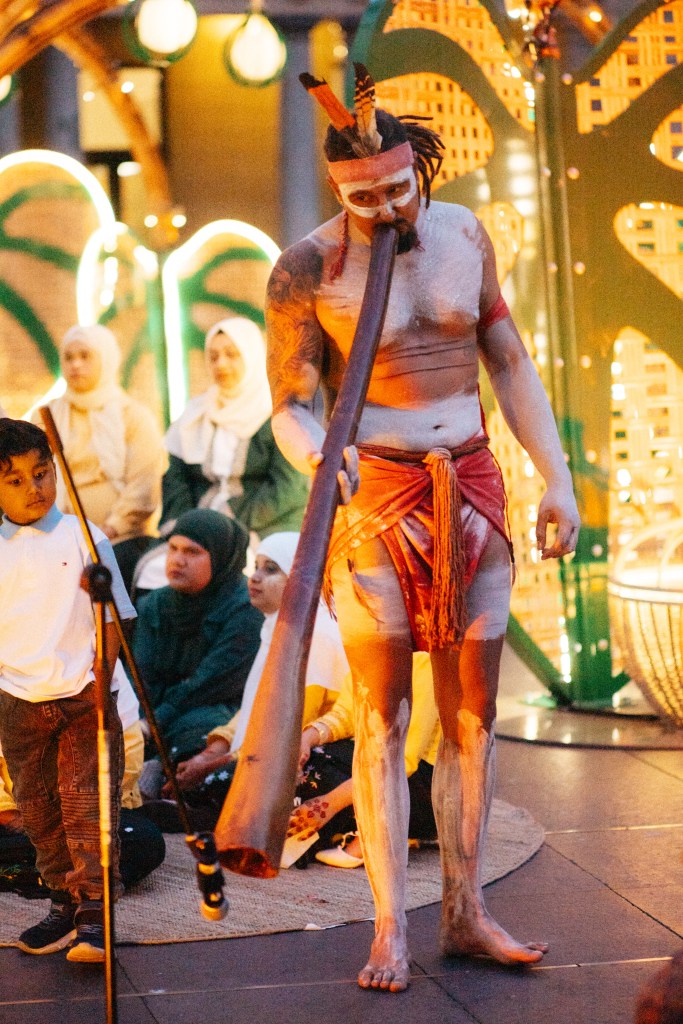
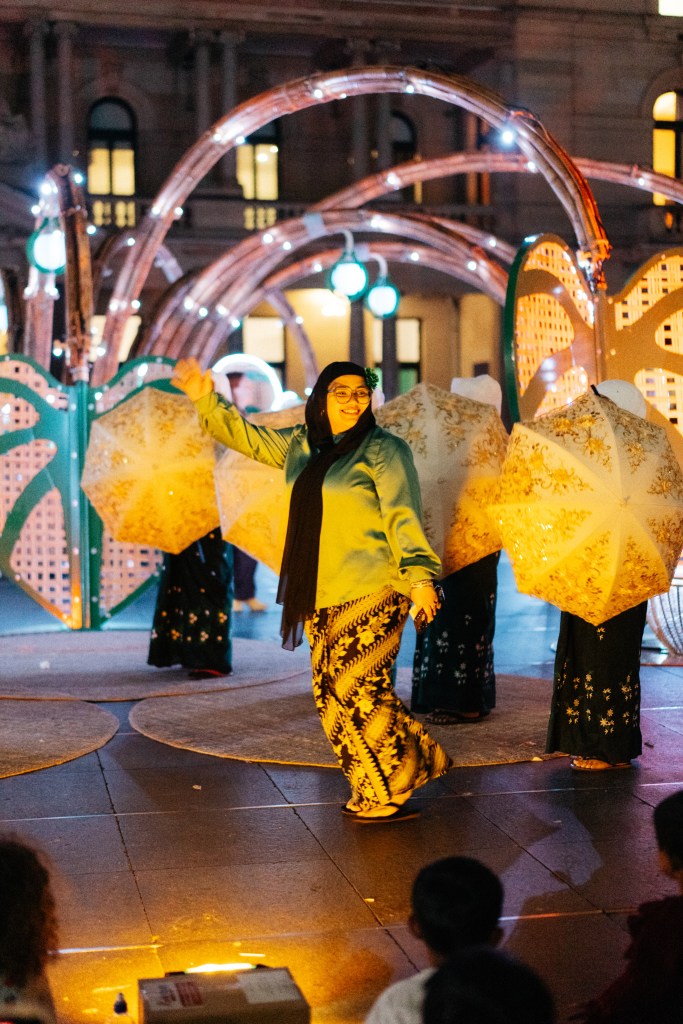
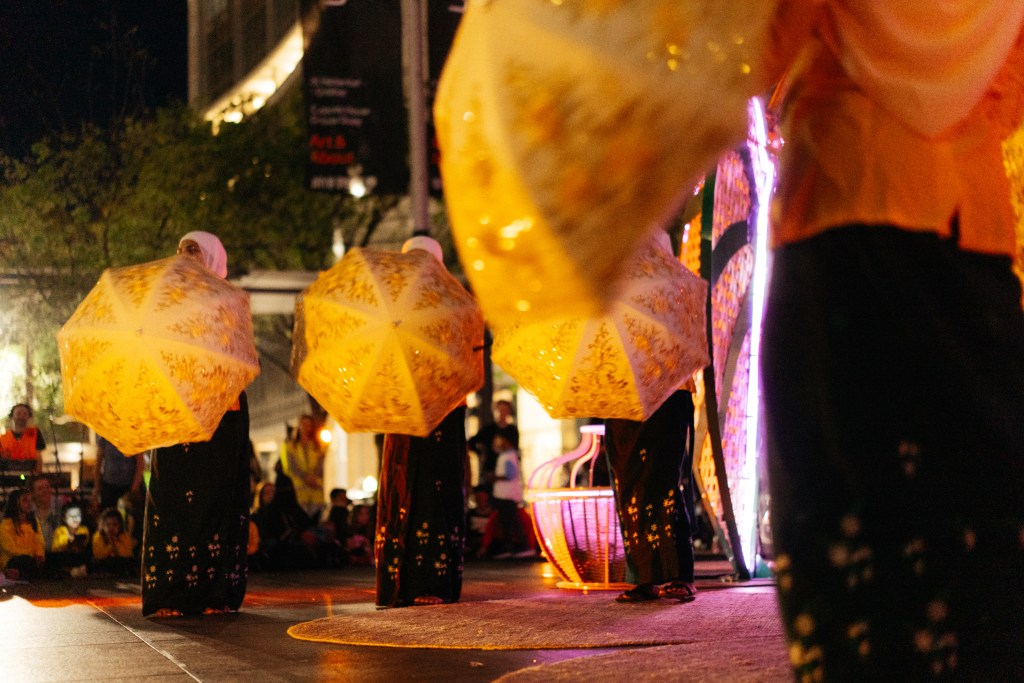
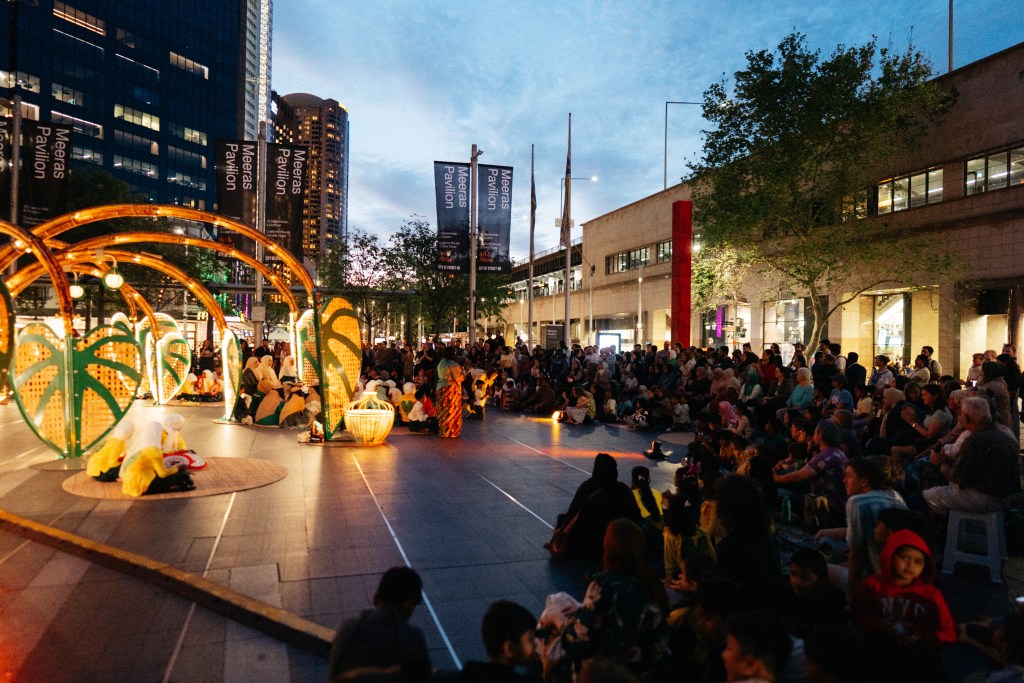
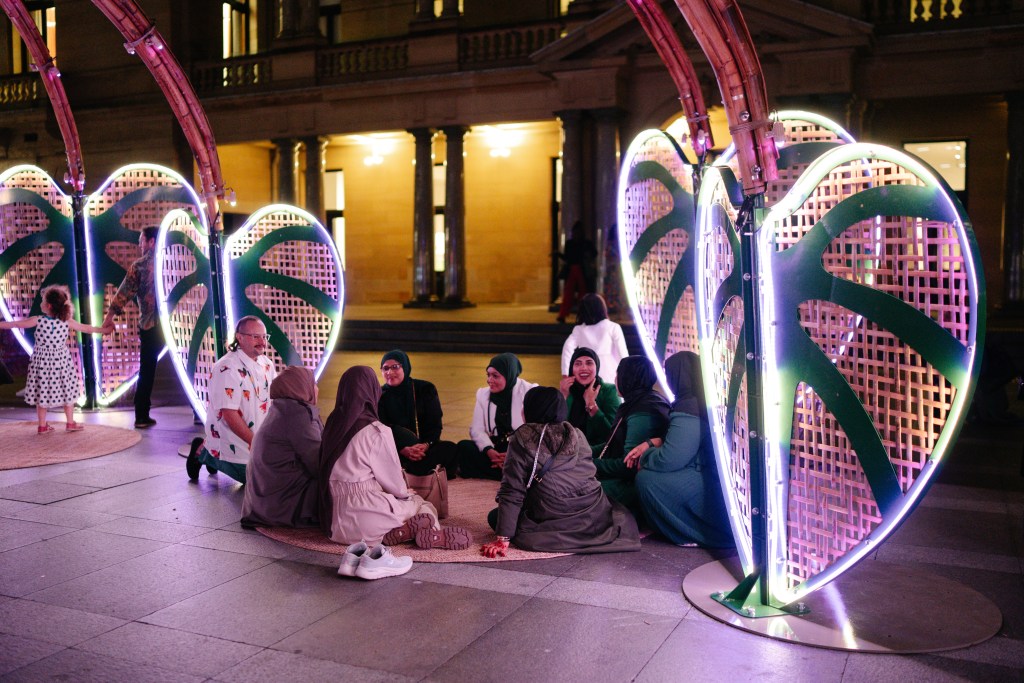
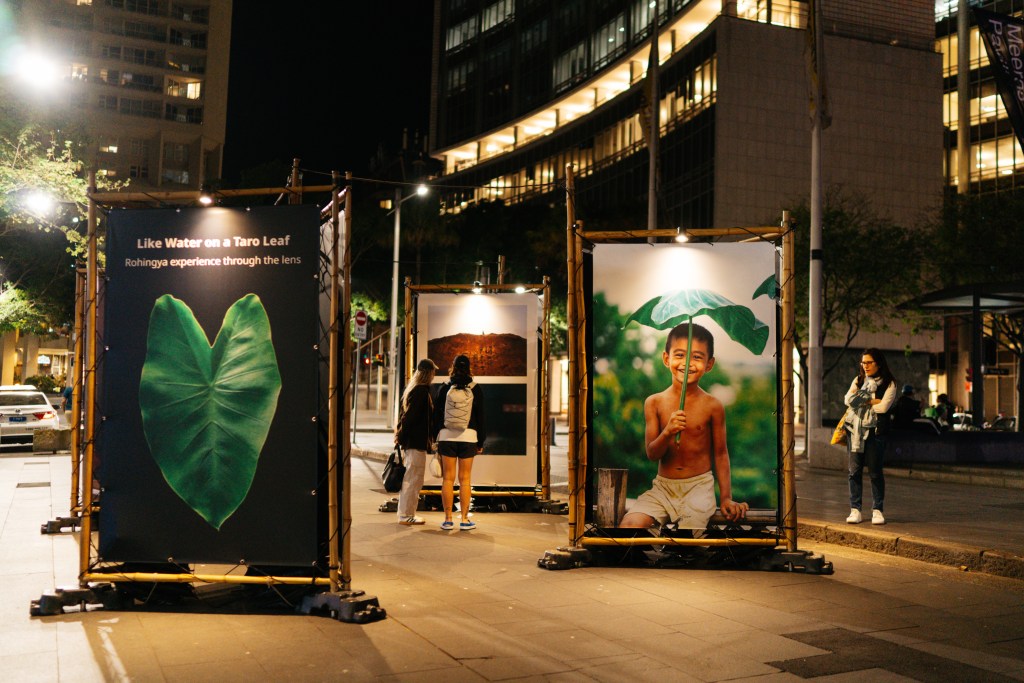
Alongside the Pavilion, a photo exhibition ‘Like Water on a Taro Leaf’ was displayed. The collection of photos celebrated the way Rohingya communities are making a mark by continuing to practice culture, resist erasure and continue their legacy (Meeras), despite immense challenges and living life in limbo – By Victor Caringal and Zia Hero from Rohingya Photographer.
The story of it’s creation
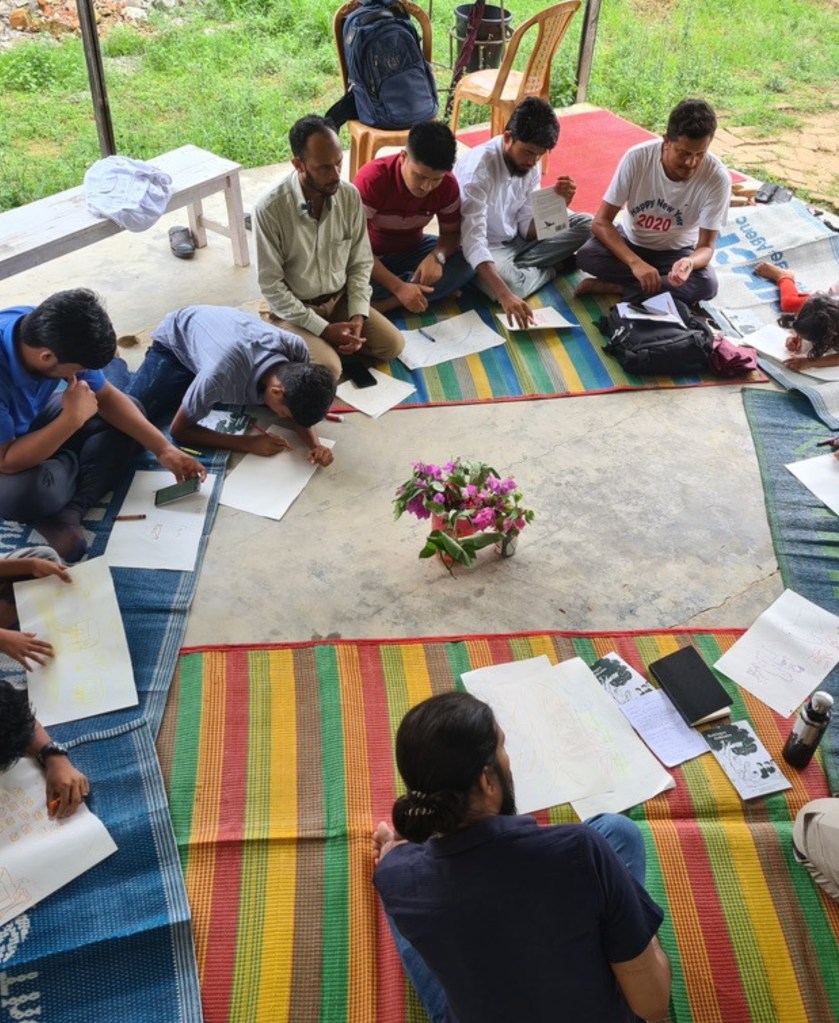
Meeras was co-designed through years of creative workshops with Rohingya communities and allies in Sydney, Malaysia and Kutupalong refugee camp. This was led by members of the Creative Advocacy Partnership, and included a series of conversations and drawing activities that invited communities to reflect on their experiences of living as stateless people, how they were coping and the messages they wanted to share with the world. A collection of powerful stories were woven into the design of the artwork.
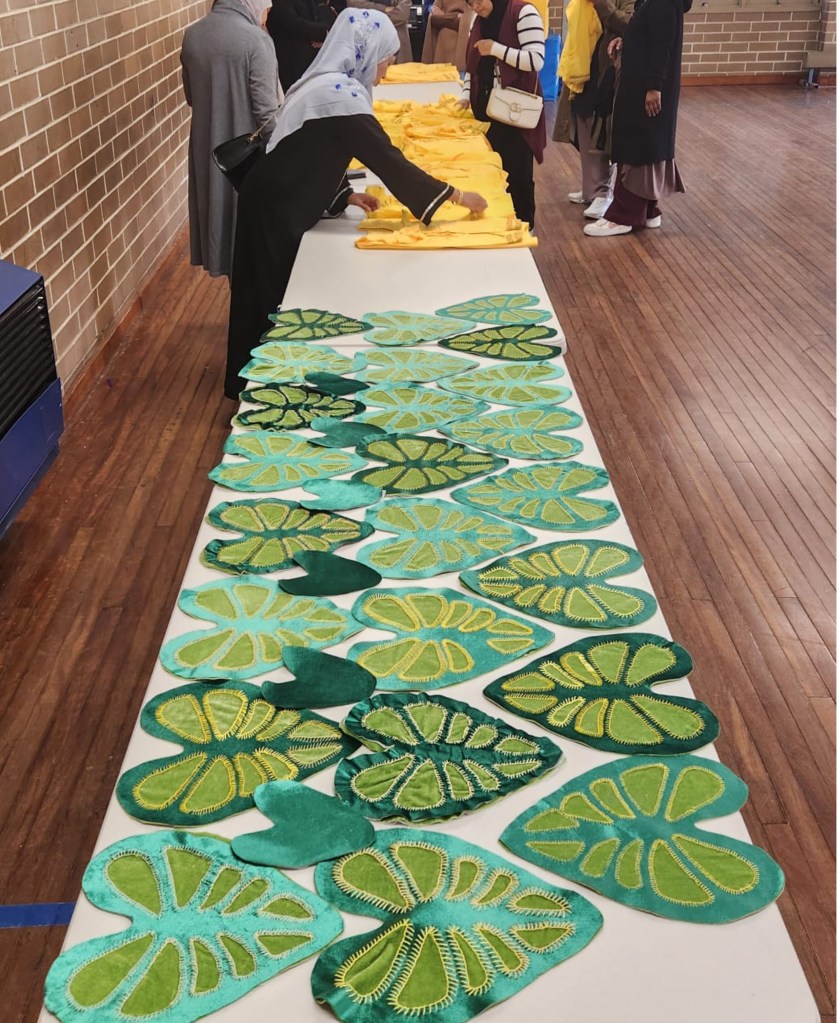
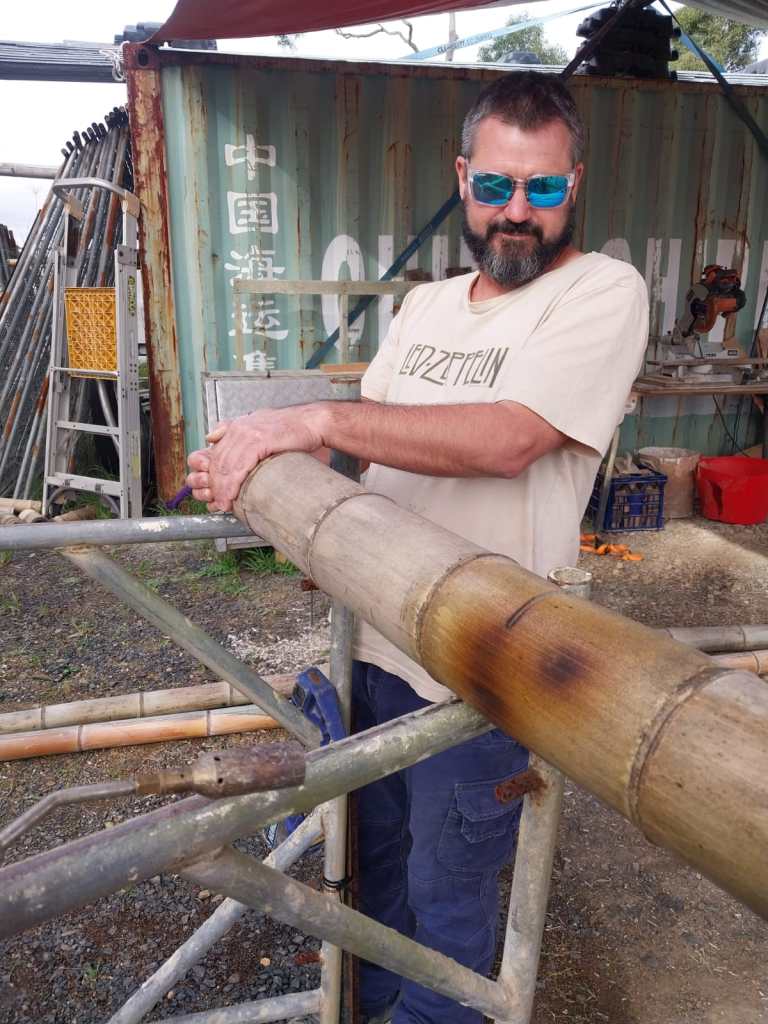
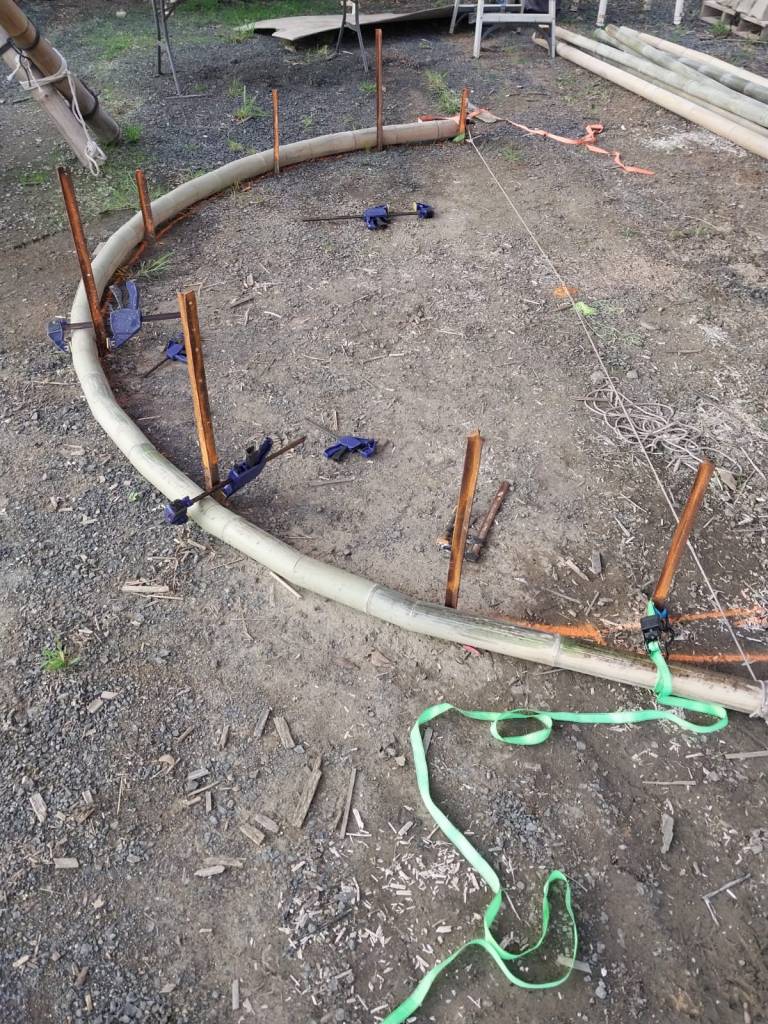
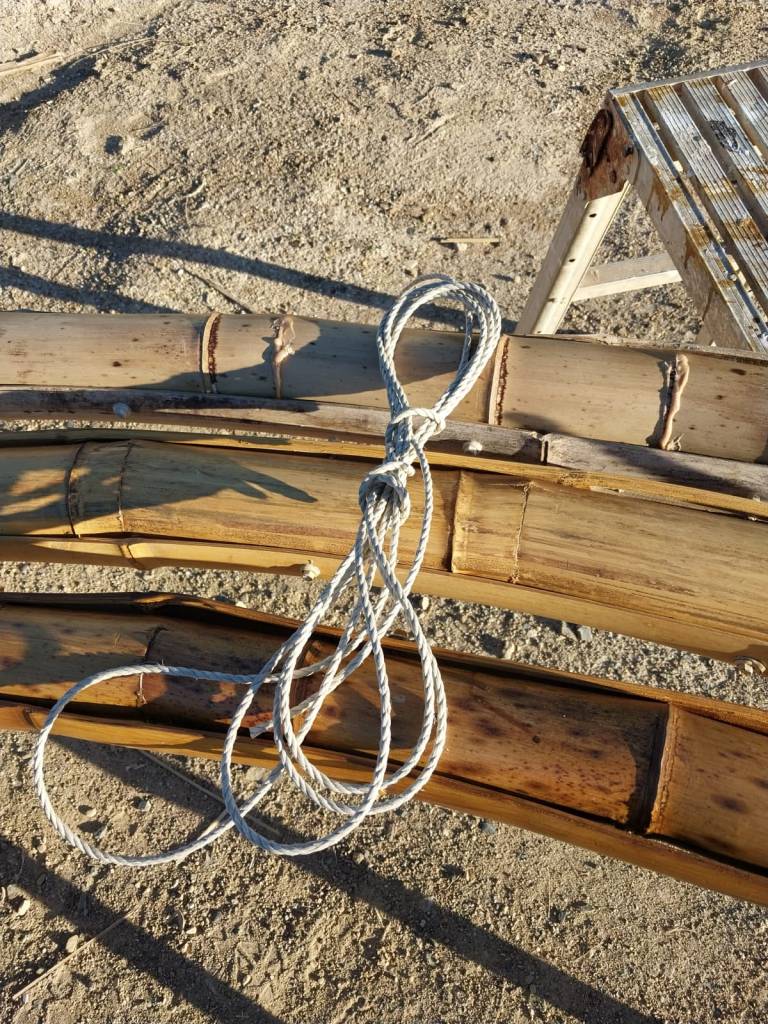
The build of the art-work was led by Amigo and Amigo and Lucid Space Design. However, over the past year Rohingya and Australian artists and allies have gathered in Lakemba and Marrickville to collaboratively make parts of the artwork, including weaving the Taro Leafs and Water jugs in Bamboo and rope. Over 150 people have been involved in this making, while exchanging skills, stores, food and gradually building a bigger community around the artwork.
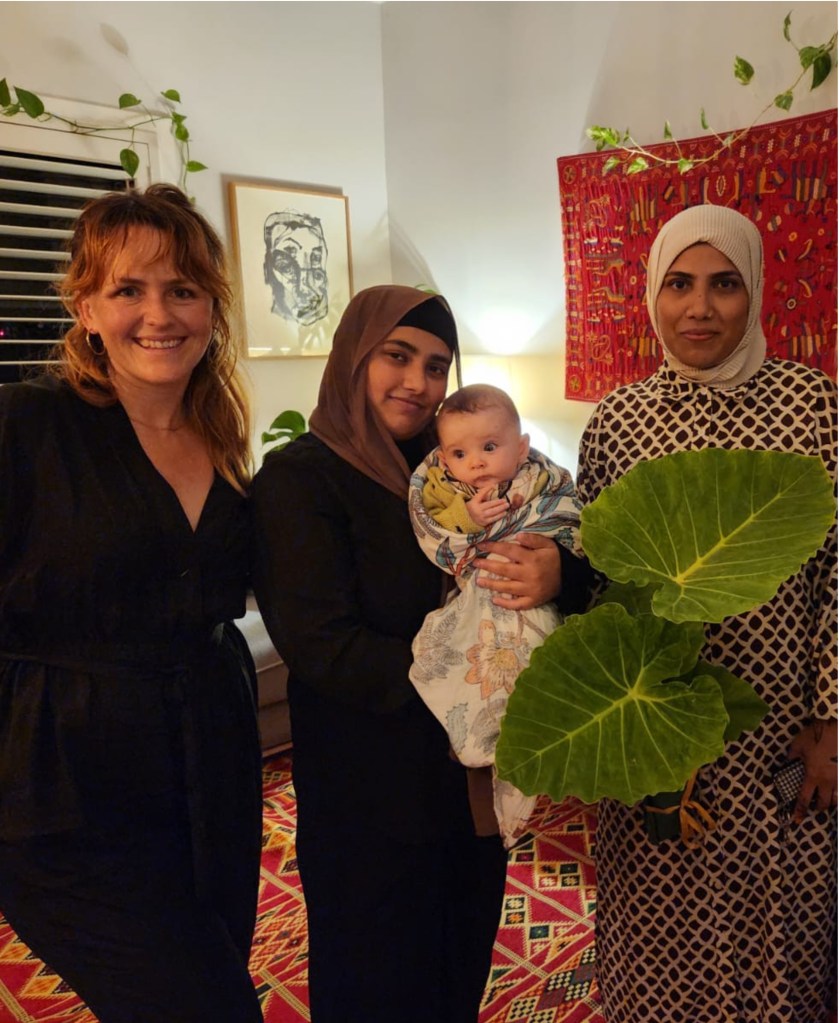
An accompanying cultural program was developed by a group of Rohingya Women connected to ARWDO. The group met fortnightly in Lakemba to share stories, sing together and hand sew outfits for the fashion parade. This space was held by members of the CAP along with co-frounders of ARWDA – Asma and Sajeda. Along side this a series of education and advocacy programs were developed to engage the public and politicians in meaningful ways (co-led with MSF and RMCN).
The soundscape was developed by Otis Studios, bringing together field recordings taken by the team in Australia and Bangladesh, it includes sounds of rain on the borders of Myanmar, moments of making, singing and telling stories together as well as sounds that echo the proverb of water off a Taro Leaf.



Symbols in the artwork: Telling stories
of statelessness and home
The Rohingya are among the most persecuted minorities in the world — and the largest so called ‘stateless’ population. For decades, they have endured systematic violence and exclusion. Today, 99% live in conditions of containment: refugee camps, detention centres, or in countries where they are denied citizenship.
Statelessness strips away more than legal rights. It erodes culture, identity, and the sense of belonging itself. The Rohingya experience is not only a humanitarian crisis — it is an existential struggle to preserve dignity, memory, and a future as a people.
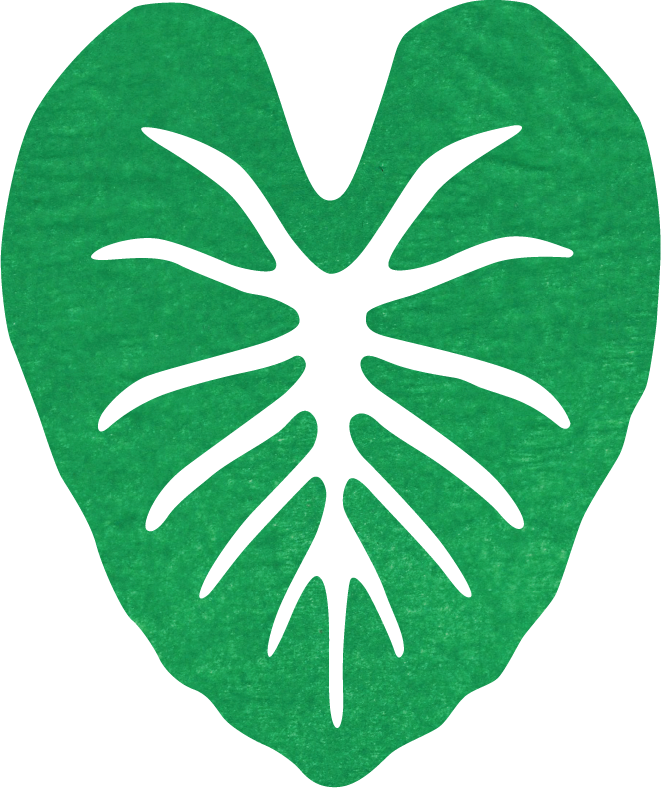
At the heart of Meeras are 16 taro leaves, each carrying the proverb Hoñsu Fathar Faaní — “Water on a taro leaf.” This Rohingya proverb speaks to the way water sits on a Taro leaf like it’s floating, and then rolls off when the wind blows leaving no mark. This captures the experience of statelessness: the feeling of floating without anchor, belonging nowhere, and being pushed between nations that refuse recognition.
“This is what statelessness feels like, because in Arakan our existence is being erased, and no matter where we live we cannot make a mark, its difficult to get our documents, practice culture and build a life. It feels like we are floating above the land, even gravity is against us. But for Rohingya people, existing is resisting, we need to keep living our lives, telling our stories, and continuing our legacy.” – Rohingya leads in the Creative Advocacy Partnership (CAP).
Yet the Rohingya are not defined by statelessness. They are a people who demand — and deserve — a return to their homes in Rakhine State, with dignity, safety, and hope for the future.
Every day, Rohingya people make their mark. Through their art and music. Through their culture and traditions. Through their partnerships and resistance. Through the simple act of existing in despite of their situation, persecution, and plight.
The Taro leaf is growing as an international symbol for Rohingya advocacy – read about the Taro Leaf project here, and ways the CAP are supporting communities to develop it through storytelling and creative practice.
Other forms in the design is the central trunk and low canopy that references the Banyan tree which acknowledging Rohingya’s long connection to country, and the water jugs at the base of the leaves which celebrates Rohingya generosity as farmers would place them under the Banyans to offer rest for tired travellers.

More detailed credits
There are a wide range of amazing partners involved in this ambitious project. See partners below.
Creative Advocacy Partnership (CAP) – Co-design and programming Lead
The Creative Advocacy Partnership is a collective of artists, allies, and advocates. Originally seed funded by Medecins Sans Frontieres Australia, Meeras is now supported by a range of organisations.
Amigo & Amigo – Design and production Lead
Co-designers, builders, and fabricators for the Meeras Pavilion at Art and About. Director is part of Creative Advocacy Partnership. Budget holders for artwork and build.
Leading Rohingya orgs:
- Australia Rohingya Women’s Development Organisation -A Rohingya Women lead organisation focused on advocacy, community settlement and rights for Rohingya women and families.
- Rohingya photographer – a photography magazine in Kutupalong refugee camp and community led storytelling projects shifting narratives around Rohingya communities
- The Rohingya Maìyafuìnor Collaborative Network – network of Rohingya women dedicated to advancing the human rights of the Rohingya people
Supporting Partners
- Medecins Sans Frontieres Australia
- Amnesty International Australia
- Asylum Seeker Resource Centre
- Refugee Council of Australia
- Australian Global Health Alliance
- City of Sydney
- Amigo & Amigo
- Event Engineering
- Lucid Space Design
- Hampden Park Public School
- Otis Studios
 Creative Advocacy Partnership