
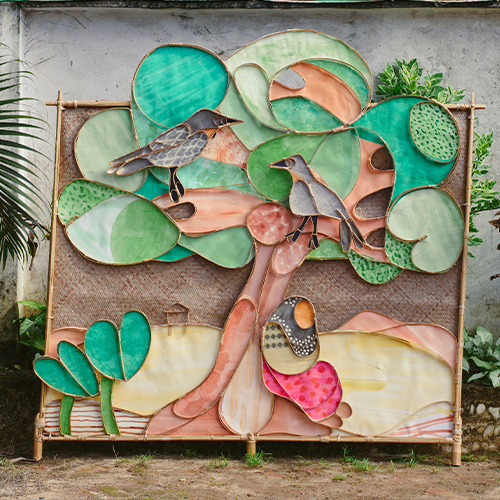
Two weeks collaborating with Rohingya storytellers, families and bamboo weavers to create a large artwork illustrating a Rohingya folktale about two crows – one from the city and one from the country who meet in a Banyan tree and work together to find food.
The 25th of August marks six years since 700,000 Rohingya fled their homeland. To acknowledge this time, artists from Australia travelled to Kutupalong to collaborate with Rohingya storytellers, families and bamboo weavers. Together they designed and built a large panel illustrating a Rohingya Kyssa (folktale) of two crows, one from the city and one from the country, who meet in a Banyan tree and learn the value of cleverness and unity in difficult times. During a week of remembrance the story panel is moving around Médecins Sans Frontières hospitals in Kutupalong where families and MSF staff are invited to join Kyssa gatherings (a Rohingya practice of sharing stories and reflecting on the messages they carry).
While creating the story panel, local and visiting makers brought their practices together to developed a new technique called “cane glass”. It looks like stained glass but the frame is made from curved bamboo and then filled with paper, painted in collaboration with Rohingya children. This work was commissioned by MSF as a way to explore creative advocacy, an approach that uses creative practice to form partnerships with community, strengthen culture and share stories that move the international community to build deeper understanding, care and allyship.

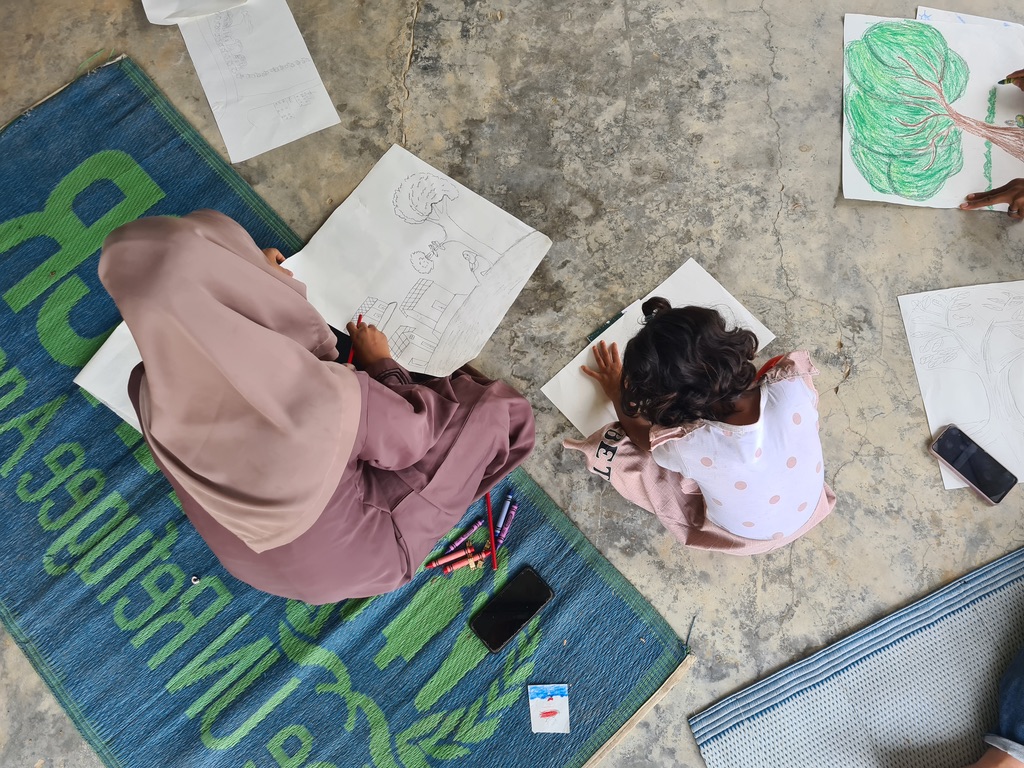
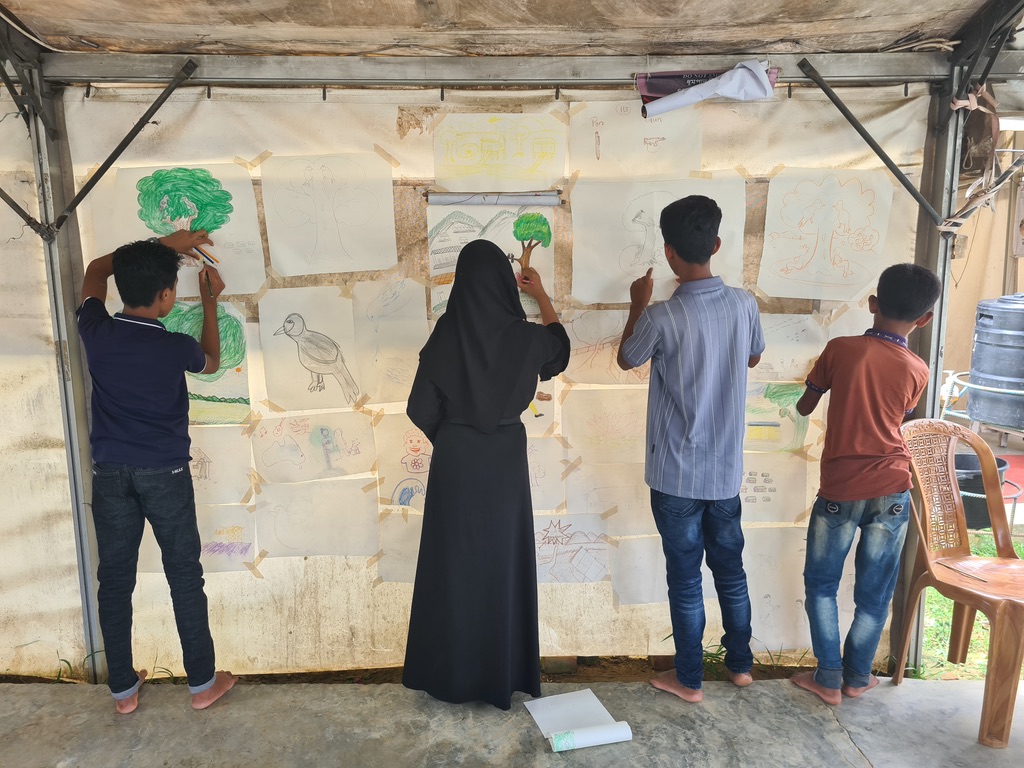
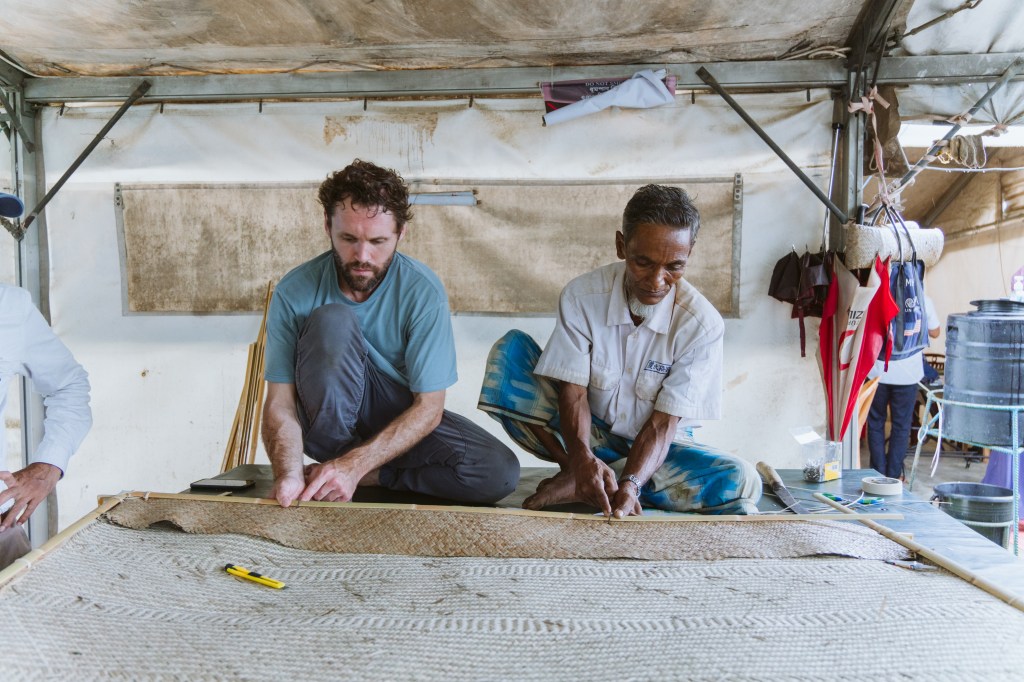
While the children painted the weavers prepared the bamboo. The process began with raw bamboo poles, these were cut to 2m lengths, and then repeatedly split with a machete to make thin strips. The machete was then used like a plane to shave the strips down further (thin enough to bend and smooth enough to run across your tongue). Thinner strips of cane were then prepared through a similar process for the binding.
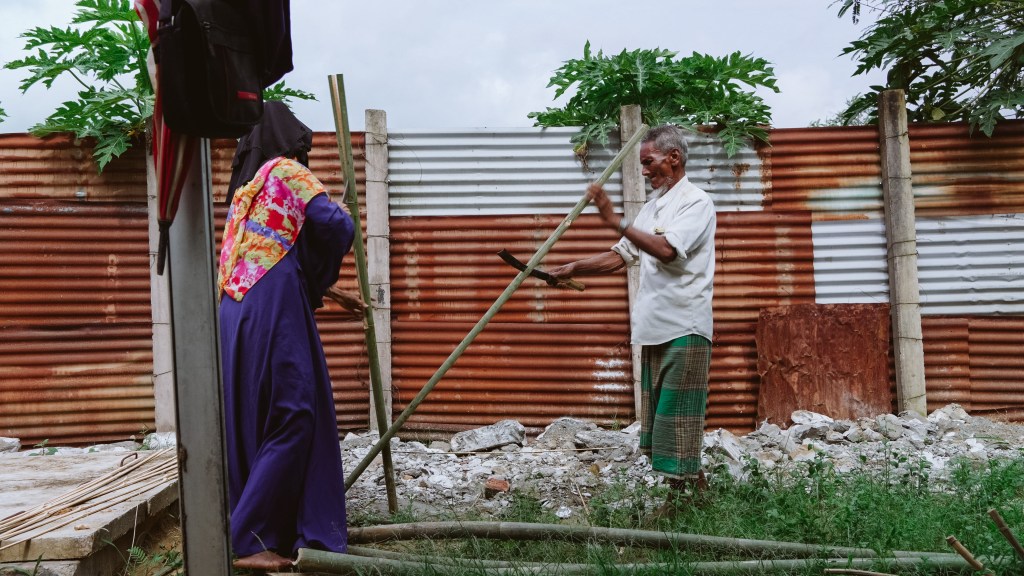
“We come from a farming family, and weaving is part of this…In the camps we started to do this because if we don’t, our generation will forget our Rohingya culture…First, we ourselves know the practice, then we can help other people to learn and know. Then when we pass away at least the practice will remain, and they can share and can teach others.” – Nuru Salam and Nurus Safar
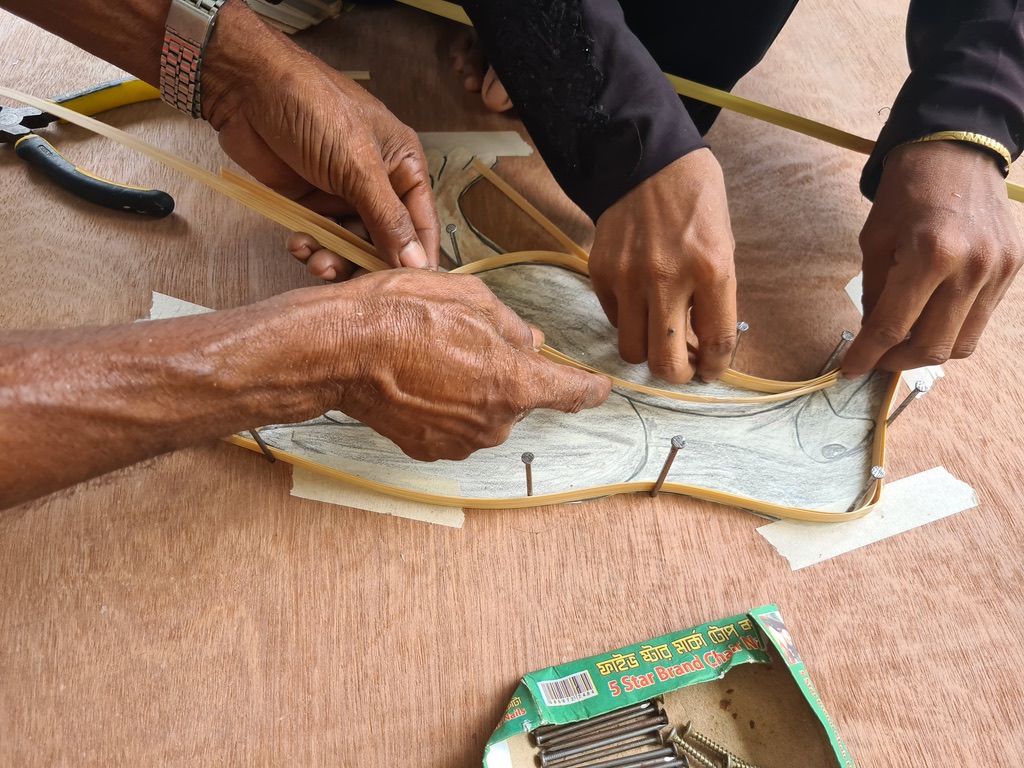
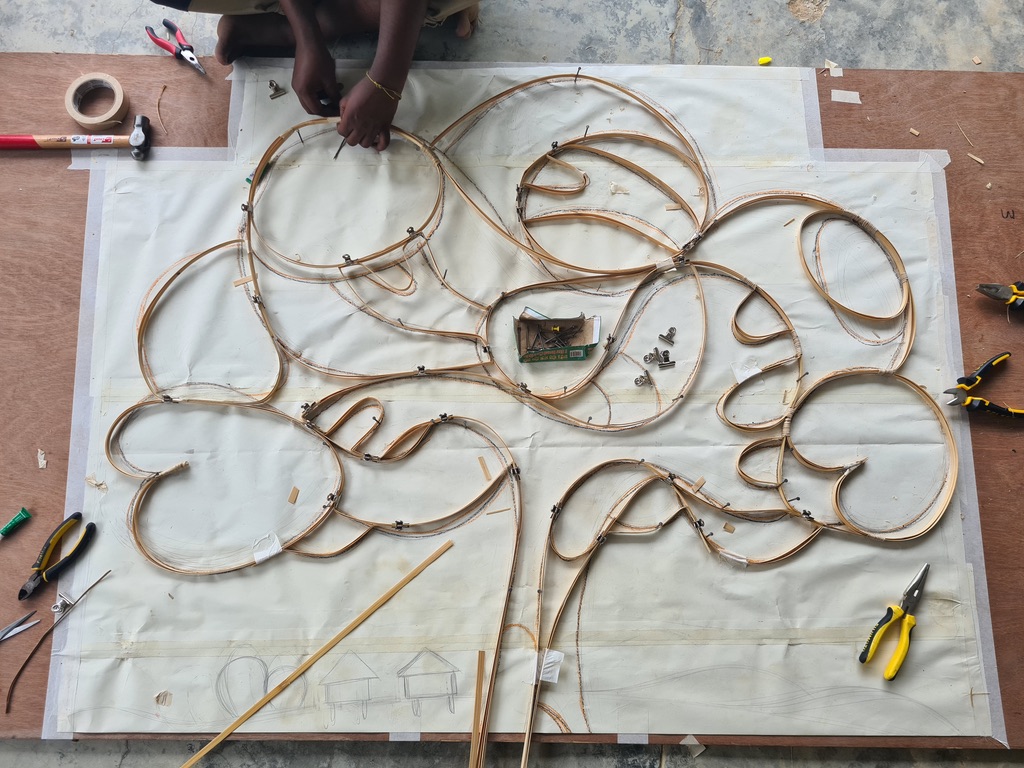
The group’s drawings were brought together into a final design. The bamboo strips were turned on their side, layered up, curved into forms and held together the cane binding. The local and visiting makers spent over a week weaving together, often with no spoken language, figuring things out, teaching each other and making jokes though slapstick humour.
“we used the international language (body language)” – Nuru Salam

“The Rohingya situation is often described as the “forgotten crisis”, we need to keep bringing people’s attention back to this community. Creative advocacy does not take away from our engagements with decision-makers, but aims to raise awareness in ways we haven’t tried before” – Arunn Jegan (MSF Humanitarian Affairs lead.)
Videos
Overview of the collaboration and Rohingya culture: –https://www.youtube.com/watch?v=0lR9YkXbNRQ
An animation of the folktale (bringing the cane glass panel alive): https://www.youtube.com/watch?v=-HEM0LPLbxs
The meaning behind the folktale:
https://www.youtube.com/watch?v=L3Mb4m3r0dk
Highlight the current situation in Kutupalong:
https://www.youtube.com/watch?v=RQox7HnWzYM
Photos
Photos by Victor Caringal and Tasman Munro

 Creative Advocacy Partnership